
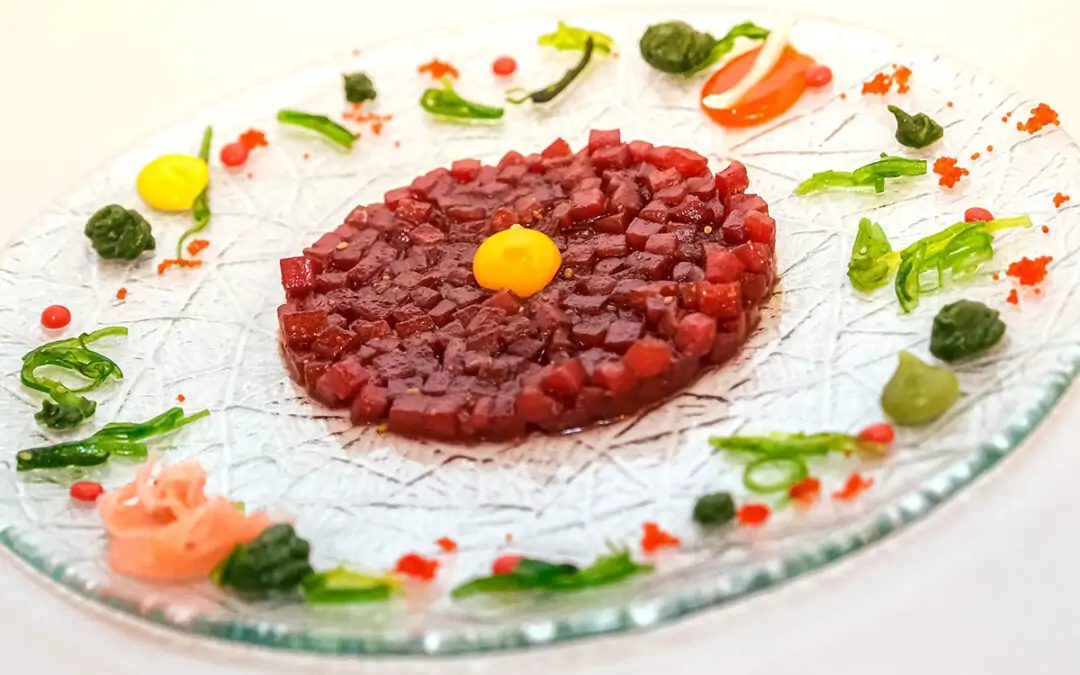
THE TREASURE OF THE STRAIT
If there’s one product that defines the gastronomic identity of the Cádiz coast, it’s undoubtedly the almadraba bluefin tuna. This colossal fish—which can weigh over 300 kilograms and reach lengths of over three meters—is the star of one of the oldest fishing traditions in the Mediterranean world every spring, transforming the Cádiz coast into a stage for exceptional gastronomy. At El Punto Restaurant in Vejer de la Frontera, we’ve been paying it the tribute it deserves for decades.
In this comprehensive guide to almadraba bluefin tuna, we tell you everything you need to know: its ancient history, the magic of the almadraba technique, the best season to enjoy it, and, most importantly, how you can savor it in the best possible way at our restaurant in Vejer de la Frontera.
WHAT IS ALMADRABA BLUEFIN TUNA?
Bluefin tuna (Thunnus thynnus) is the undisputed king of the Mediterranean and the North Atlantic. This highly migratory species spends much of the year in the depths of the North Atlantic and, each spring, embarks on an epic journey to the Mediterranean Sea to reproduce. During this voyage, schools of bluefin tuna cross the Strait of Gibraltar, and it is precisely in this area that the almadraba tuna traps of Cádiz intercept them using a technique with over 3,000 years of history.
Almadraba bluefin tuna is considered in the culinary world to be the equivalent of caviar or truffles. Chefs of the caliber of Ferran Adrià, Juan Mari Arzak, and David Muñoz have unequivocally declared that almadraba tuna from Cádiz is one of the best ingredients on the planet. And this isn’t by chance, but due to a unique combination of factors: the fish’s diet during its long Atlantic journey, its extraordinary marbling—comparable to Japanese Wagyu beef—and the minimal stress it experiences thanks to the traditional fishing technique.
In the Cádiz region, four almadrabas (traditional tuna traps) safeguard this natural treasure: Conil de la Frontera, Barbate, Zahara de los Atunes, and Tarifa. The closest to Vejer de la Frontera is Barbate, which allows us at El Punto Restaurant to access top-quality tuna, with the traceability and freshness that this extraordinary product demands.
THE HISTORY OF THE ALMADRABA: 3,000 YEARS OF TRADITION
The word “almadraba” comes from the Arabic “al-madraba,” meaning “place where one strikes.” But the origins of this fishing technique predate the Arab presence on the Iberian Peninsula: the Phoenicians were already practicing it on these coasts more than three millennia ago, and the Romans perfected it, transforming it into an industry that supplied the entire Empire with garum—the prized fermented tuna sauce.
For centuries, the almadraba was the main economic lifeline for the towns along the coast of Cádiz. The “ronqueos”—the process of butchering the tuna, so named because the knives used produce a sound similar to snoring—were authentic collective ceremonies that involved the entire community. The tuna was divided into cuts with their own names—ventresca, tarantelo, morrillo, descargamento, ijada—and each had its own traditional uses and recipes.
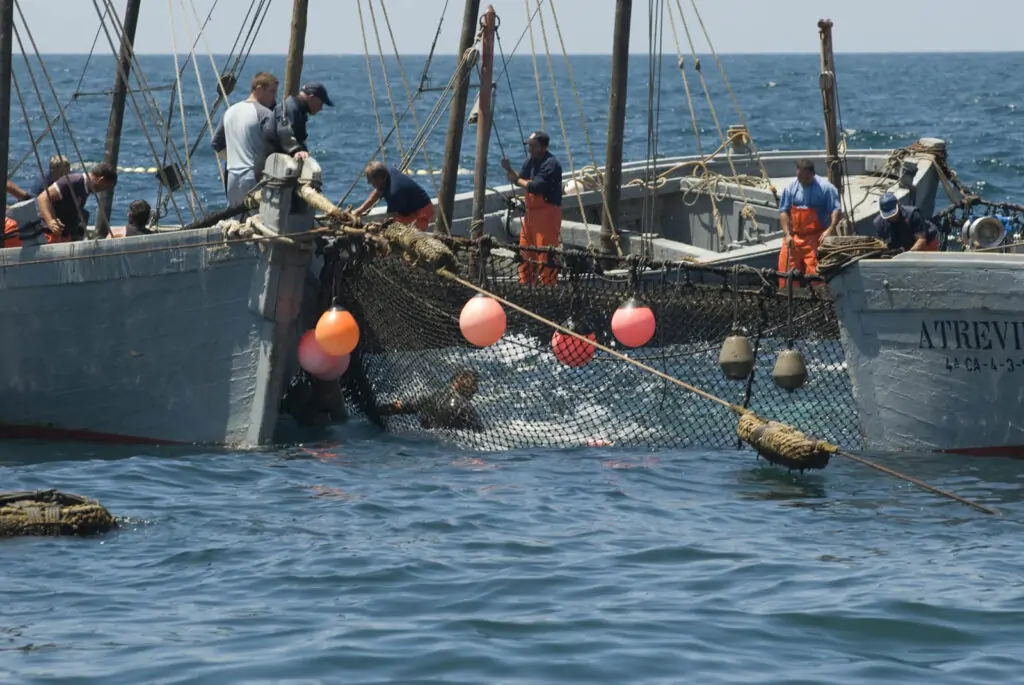
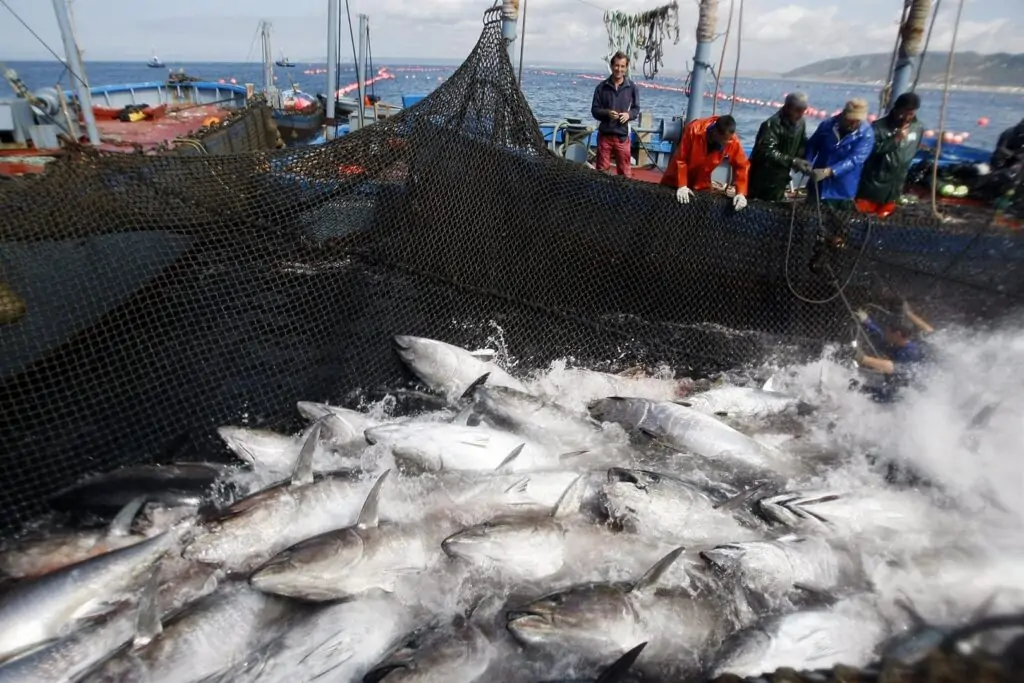
Today, the almadraba fishing method in Cádiz remains a completely artisanal art. The almadraba fishermen lay a complex trap of nets on the seabed that channels the tuna toward a central chamber called the “copo.” When the copo is full, the “levantá” begins: the fishermen, aboard small boats, haul the nets to the surface. What emerges is a breathtaking spectacle: hundreds of bluefin tuna, enormous and gleaming under the Cádiz sun, selectively caught and slaughtered using an ancient technique that guarantees the highest quality meat by minimizing the animal’s suffering—before being transferred directly to the fishermen’s guilds and restaurants in the area.
THE ALMADRABA TUNA SEASON IN CÁDIZ: WHEN THE KING ARRIVES
For food lovers, the almadraba bluefin tuna season in Cádiz is the most anticipated gastronomic event of the year. It typically runs from April to June, peaking in May when schools of bluefin tuna cross the Strait of Gibraltar in greater numbers. During these weeks, the tuna are at their optimal fat content and marbling, resulting in meat with an incomparable flavor and texture.
Once the migration season to the Mediterranean (the so-called “right” season) is over, the tuna return to the Atlantic in August and September (the “reverse” or “return” season). However, experts from Cádiz agree that the migrating tuna—the spring migration—is of superior quality to the returning tuna, as it arrives fed and in peak condition from the Atlantic, while the returning tuna are returning after their reproductive efforts.
We work with almadraba tuna, tunnel-frozen at -60ºC (ultra-freezing), which preserves 95% of the organoleptic properties of the fresh product. It’s the only honest way to offer high-quality almadraba tuna year-round.
CUTS OF TUNA: A UNIVERSE IN ITSELF
Almadraba bluefin tuna is a gastronomic universe unto itself. Unlike other fish, each part of the tuna has a different flavor, texture, and cooking technique, making it an extraordinarily versatile product:
BELLY (TORO) — The most prized cut. It’s the lower part of the tuna’s belly, with extraordinary fat marbling. Its flavor is mild, almost buttery, and it melts in your mouth. In Japan, it’s known as “toro” and fetches stratospheric prices. Ideal grilled with minimal handling so the fat renders smoothly.
CHEST — The most muscular part of the tuna’s neck. It has an intense and deep flavor, with a firm texture that holds up perfectly to grilling and marinades. It’s a favorite cut among many chefs for its powerful flavor.
LOIN BELLY — The lower part of the loin, between the belly and the white loin. Firmer texture than the belly, but equally fatty and flavorful. Perfect for the oven or grilling.
LOIN — Divided into the white loin (the upper part of the loin, leaner) and the dark loin (the dorsal part, with a more intense flavor). The loin is the most versatile cut of tuna and ideal for tartare, tataki, or grilling.
LOIN — The piece closest to the central bone. Fibrous texture and very concentrated flavor. Perfect for stews, braised dishes, and canning.
SHOULDER — The area of the shoulder, between the fins. Extremely fatty and intensely flavorful. One of the most prized delicacies among connoisseurs.
EL PUNTO’S ALMADRABA BLUEFIN TUNA TARTARE: OUR SIGNATURE DISH
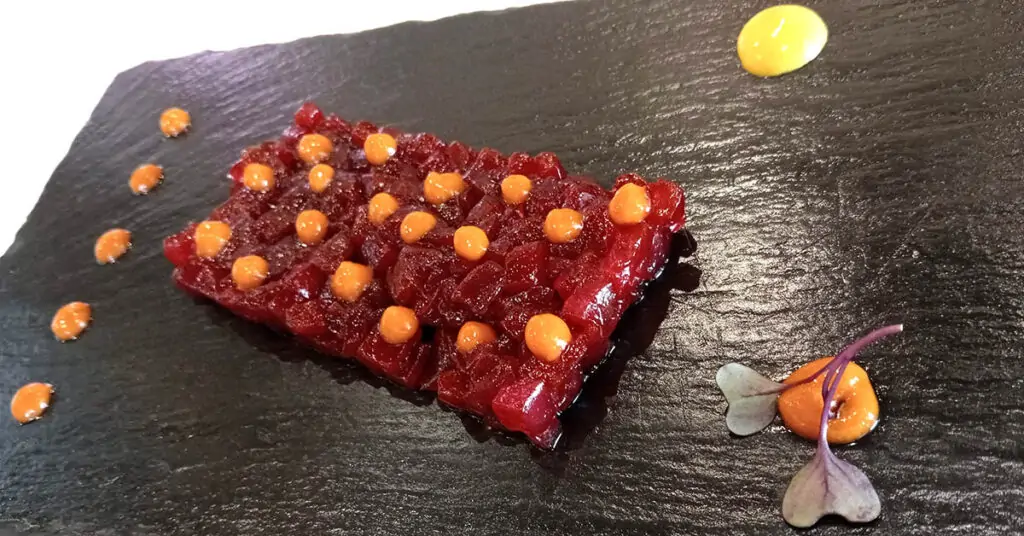
At El Punto Restaurant, our Almadraba bluefin tuna tartare is undoubtedly one of our most emblematic dishes and one that has most significantly shaped our culinary history in Vejer de la Frontera. Made with premium Gadira brand tuna, the tartare is prepared using our own unique method, respecting the purity of the product and adding nuances that enhance its flavor without overpowering it.
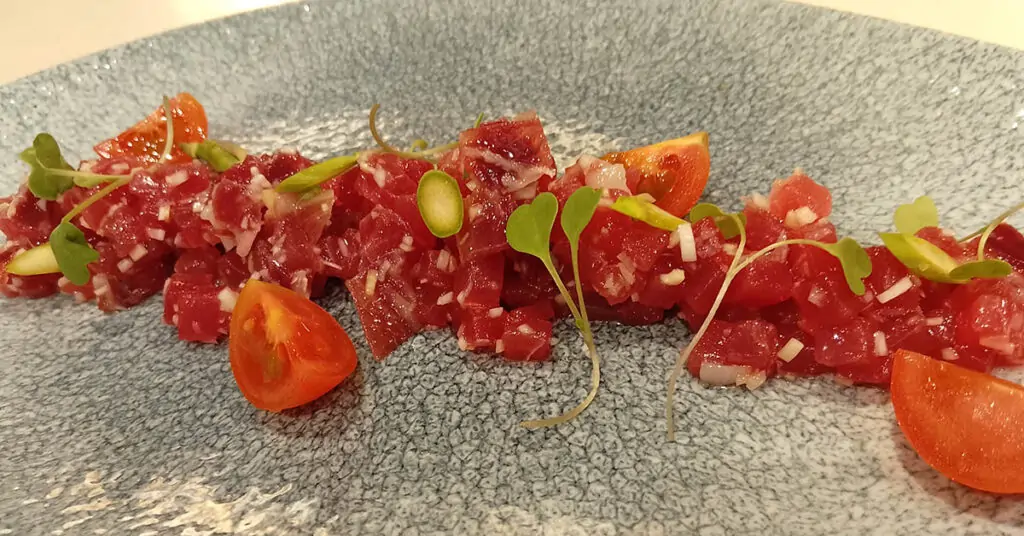
Bluefin Tuna Tartar from Almadraba Gadira with flavors of the land
Our customers rave about it: “In my opinion, it’s even better than the one at El Campero in Barbate, and until now that was my favorite,” one customer wrote on Google. “Spectacular,” “a unique experience,” “the best tuna I’ve ever eaten.” These accolades aren’t just a fluke, but the result of decades of working with the best suppliers and a kitchen that respects and understands the product.
We also prepare Almadraba Gadira bluefin tuna tartare with local flavors, featuring 100% Iberian acorn-fed ham. We also offer Almadraba Gadira bluefin tuna tartare with onion pil-pil sauce, another unique way to enjoy Almadraba bluefin tuna. The mouthfeel evokes the typical tuna stew from the region, while also offering the texture of raw tuna.
Gadira Bluefin Tuna Tartar with onions pil-pil sauce
VEJER DE LA FRONTERA AND TUNA: AN INEVITABLE RELATIONSHIP
Vejer de la Frontera and almadraba tuna are inseparable. Although this whitewashed town is located a few kilometers from the sea, its history and economy have been linked for centuries to tuna fishing in Barbate and Zahara de los Atunes. In fact, Vejer’s gastronomy is unthinkable without tuna: tuna stew, mojama (cured tuna), cured tuna roe, tuna eggs… these are dishes that have been part of the local cuisine since time immemorial.
Today, Vejer de la Frontera has become one of the most highly regarded gastronomic destinations in Andalusia, largely thanks to the international renown of Cádiz’s almadraba tuna. Tourists from all over Spain and Europe visit the region, drawn precisely by the opportunity to eat the best bluefin tuna in the world in its natural environment.
At El Punto Restaurant, we are aware of this privilege and honor it each season with a selection of dishes that represent the best of this ancient tradition.
WHERE TO EAT ALMADRABA TUNA IN VEJER DE LA FRONTERA
If you’re looking for the best almadraba bluefin tuna in Vejer de la Frontera, El Punto Restaurant is your destination. We are located at Avenida de Andalucía, 6, at the main entrance to Vejer, with an intimate and welcoming atmosphere that invites you to savor every bite at your leisure.
Our cuisine combines respect for the traditions of Cádiz with a contemporary vision that brings out the best in such an extraordinary ingredient as almadraba tuna. If you visit Cádiz in spring or summer, you can’t leave without having tried almadraba tuna at El Punto Restaurant.
Book your table in advance, especially during peak season (April-August), as our dining room is intimate and demand is high during the months with the greatest tourist influx in Vejer de la Frontera.
Frequently Asked Questions about Almadraba Tuna in Cádiz
When is the almadraba tuna season in Cádiz?
The main almadraba bluefin tuna season in Cádiz runs from April to June, peaking in May. Outside of the season, the best restaurants in Vejer use tuna that is flash-frozen at -60ºC to maintain its quality.
How much does almadraba tuna cost in a restaurant?
The price of almadraba tuna in restaurants varies depending on the cut and preparation, but it generally ranges from €20 to €35 per dish. It is a premium product whose quality fully justifies the price.
What is the difference between almadraba tuna and conventional tuna?
The almadraba bluefin tuna caught in Cádiz is Thunnus thynnus, the Atlantic bluefin tuna. It has a much higher fat marbling than common tuna (Thunnus albacares or “yellowfin”), with a much richer and more intense flavor. There’s simply no comparison.
Can I eat almadraba tuna in Vejer de la Frontera year-round?
Yes. At El Punto Restaurante, we offer almadraba tuna year-round, with high-quality, flash-frozen tuna available all year.
CONCLUSION: VEJER AND TUNA, A PERFECT PAIRING
The almadraba bluefin tuna from Cádiz is, without exaggeration, one of the great ingredients of world gastronomy. Its ancient history, its artisanal fishing methods, the richness of its cuts, and the intensity of its flavor make it a culinary experience that goes far beyond a simple fish dish.
If you have the opportunity to visit Vejer de la Frontera, don’t miss the chance to enjoy it at El Punto Restaurante. We’ve been here since 1987, and almadraba tuna has been part of our identity for decades. We look forward to seeing you.